Institutional Preparedness
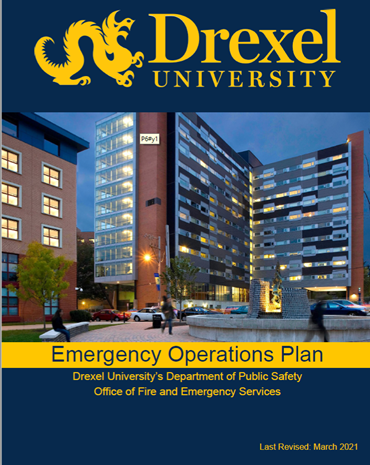
Emergency Operations Plan
Drexel Public Safety is committed to the safety and security of all students, faculty, staff, and visitors. To support that commitment, Drexel University has developed and regularly updates the Drexel University Emergency Operations Plan (EOP). The EOP is the official plan of Drexel University, inclusive of the University City, Center City and Queen Lane campuses, which outlines guidelines and procedures for the prevention, protection, mitigation, response and recovery of all incidents and emergencies affecting the University community.
Business Continuity Plans
Business Continuity Plans are organized and maintained on the Kuali platform administered by Public Safety. These plans can be accessed by internal stakeholders through the DrexelReady online administrator portal (Kuali).
Building Emergency Response Team (BERT)
BERTs are building-specific action teams that contribute to the mission of the Department of Public Safety. During an emergency, these volunteers manage an area or floor of their building where they assist with the evacuation of occupants, direct them to assigned assembly points, and identify persons needing assistance for evacuation. Through a training program offered by Fire and Emergency Services, members understand their role during an emergency event. As an event unfolds, they provide vital information to emergency responders. BERT members are identified by the red vest worn during an incident.
Emergency Procedures Bulletin
The Emergency Procedures Bulletin is a guide that identifies detailed places of refuge and situation-specific behavior posted in each building. Emergency Procedures Bulletins are located in each University-owned building near entrances or elevators.
Preparedness Partners
Federal Emergency Management Agency
Pennsylvania Emergency Management Agency
Philadelphia Office of Emergency Management
Readiness and Emergency Management for IHEs